All Categories
Featured

Table of Contents
- – How You Should Evaluate Maryland Solar Panel In...
- – How Do Maryland Solar Panel Installation Compa...
- – Handling The Permit And HOA Approval Process F...
- – Improving Your Maryland Solar Panel Installati...
- – How Financing Affects Your Decision Of Marylan...
- – Guidance On Evaluating Your Roof For Solar Pan...
How You Should Evaluate Maryland Solar Panel Installation Companies
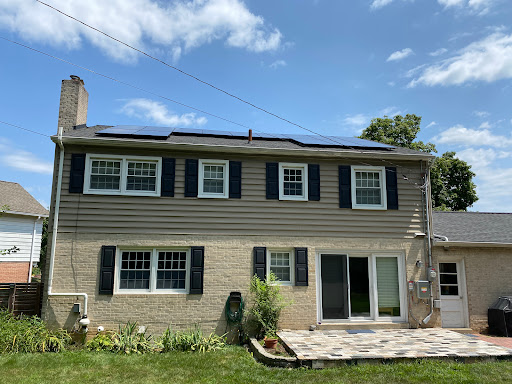
If you want to achieve energy independence, you must prioritize finding the best Maryland Solar Panel Installation Companies to oversee your project. A standard residential solar panel installation in this region costs between $31,075 and $42,043 before incentives, making your selection of solar firm the most significant factor in securing a high-quality, cost-effective system. Since a 10 kW system is advised to satisfy above-average local energy needs, you cannot justify to rely on inexperienced labor for such a significant capital investment. By evaluating installers based on their credentials and localized expertise, you will ensure your system is properly permitted and optimized for peak long-term savings. This article offers the ultimate criteria you need to choose a professional partner and maximize the return on your solar investment.
“Physical installation typically occurs over one to three days, depending on system size and complexity.” — Lumina Solar
How Do Maryland Solar Panel Installation Companies Navigate Net Metering Regulations?
Net Metering is a billing mechanism that mandates utility providers credit you at the full retail rate for any surplus electricity your system exports to the grid. This policy ensures that the energy your panels produce during peak sunlight hours balances your consumption during the evening, directly impacting the overall yield on your investment. When you evaluate What Maryland solar panel installation companies charge for their services, you must consider how these credits lower your monthly utility costs, effectively shortening your payback period to between 8 and 11 years.
“The Maryland Public Service Commission (PSC) regulates interconnection for distributed generation systems through COMAR 20.50.09.” — mdsolar.org
The monetary benefit of this arrangement depends on the effectiveness of your array and your household energy profile. Because the grid functions as a virtual battery, the system size you choose—often a 10 kW configuration for high-demand homes—determines how much surplus power you can contribute to the local network. The following table demonstrates how different excess energy credit factors influence your long-term savings:
| Factor | Financial Impact |
|---|---|
| Retail-Rate Credit | Maximum offset per kWh exported |
| Monthly Bill Threshold | Quicker recovery if spending surpasses $160 |
| System Export Capacity | Greater production generates additional credit |
Verify with your prospective installer that they have successfully managed grid interconnection applications for local utility territories to ensure your net metering credits are handled without interruption.
To optimize your solar ROI Maryland, you must prioritize a certified solar solar firm Maryland that validates your roof readiness and handles all Maryland solar permits and solar HOA rules, including those in a historic zone. You should consult Lumina Solar to compare each installation quote for a 10 kW system size, which typically ranges from $31,075 to $42,043 before applying the federal solar tax credit and the State Solar Program rebate of $750 per kW. By utilizing grid crediting and selling your solar renewable energy certificate income—currently priced at $60 to $80 per megawatt-hour—you can achieve a solar payback period Maryland of 8 to 11 years, provided you avoid the long-term cost load of a energy service agreement. When evaluating Maryland Solar Panel Installation Companies, always demand on a transparent breakdown of solar financing Maryland options and a assessment exemption to ensure your solar setup is financially optimized.
Handling The Permit And HOA Approval Process For Maryland Solar Panel Installation
Licensing and HOA compliance involves securing local municipal permissions and following neighborhood-specific regulations, which are critical tasks handled by Maryland solar panel installation companies and what they offer during the pre-construction phase. Because local ordinances and community covenants vary significantly across the state, you must ensure your chosen vendor has established procedures for navigating these regulatory landscapes to avoid project setbacks or forced modifications.
“This statute and its 2008 amendments do not apply to a restrictive covenant on historic property that is listed by the Maryland Inventory of Historic Properties or by the Maryland Register of Historic Properties.” — programs.dsireusa.org
Property location often determines the complexity of your approval process. If your home resides within a heritage district, you will likely encounter stricter oversight regarding the visual impact of your solar setup. Commissions in these areas frequently enforce aesthetic standards, such as restricting array placement to rear-facing roof sections or requiring low-profile mounting hardware to minimize visibility from the street.
To guarantee your project proceeds without administrative friction, prioritize installers who exhibit proficiency in the following areas:
- Municipal Permitting: Expertise in filing electrical and structural plans to local building departments to satisfy city or county codes.
- HOA Coordination: Expertise supplying necessary documentation—such as site maps and equipment specifications—to homeowners associations for architectural approval.
- Historic District Advocacy: Ability to prepare and present alternative design schemes that satisfy strict preservation requirements while preserving system performance.
Before signing a contract, demand a written confirmation from your solar firm detailing their specific method for securing all necessary municipal and community-level permits for your property address.
Improving Your Maryland Solar Panel Installation With A 10 kW Suggested System Size
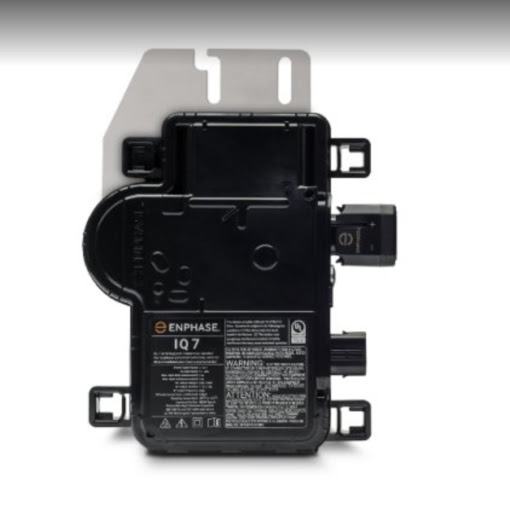
A 10 kW suggested system size is the standard configuration required to meet the higher-than-average energy requirements typical of most Maryland households. While a 7 kW system serves as a common baseline for smaller homes, it often falls short of the production needed to offset the higher consumption habits found in the region. When you evaluate How to choose among Maryland solar panel installation companies, prioritize those that execute a thorough energy audit rather than defaulting to a one-size-fits-all array.
To ascertain the correct capacity for your specific property, consider the following factors that influence your total system requirements:
- Yearly electricity consumption levels expressed in kilowatt-hours.
- Available roof surface extent and its alignment toward south-facing exposure.
- Anticipated future energy needs, such as the addition of electric vehicle charging or high-capacity heating systems.
- The effect of shading from nearby buildings or mature foliage.
The following table outlines the performance expectations for the two most common residential system configurations:
| System Capacity | Primary Utility | Baseline Cost |
|---|---|---|
| 7 kW | Entry-level baseline configuration | $18,460 |
| 10 kW | Recommended for above-average demand | $30,100 (approximate) |
Request an detailed load analysis from your installer to confirm that your planned system size matches your historical utility usage rather than a generic household average.
How Financing Affects Your Decision Of Maryland Solar Panel Installation Companies
Selecting among Maryland Solar Panel Installation Companies requires you to align your financial strategy with your long-term ownership goals, as each payment structure dictates your eligibility for the federal investment tax credit and other local incentives. You must evaluate the upfront capital needs against the total cost of ownership to ascertain which path offers the highest return on your investment.
“The Maryland Solar for All Program (MSFAP) will be launching programs that provide rebates and financing for rooftop solar on single-family homes, multifamily housing, and community solar projects.” — mdcleanenergy.org
| Financing Method | Ownership Status | Tax Incentive Eligibility |
|---|---|---|
| Cash Purchase | Full Ownership | Full Eligibility |
| Solar Loan | Full Ownership | Full Eligibility |
| Lease Agreement | Third-Party | None |
| Power Purchase Agreement | Third-Party | None |
While a cash purchase offers the fastest payback period of 8 to 11 years for those with bills exceeding $160, solar loans allow you to maintain liquidity while still claiming the federal solar tax credit. Conversely, lease agreements and a power purchase agreement remove the responsibility of maintenance and upfront costs but transfer the rights to all state incentives and solar renewable energy certificates to the financier. When you determine who are the top Maryland Solar Panel Installation Companies for your specific budget, ensure they provide a detailed analysis of the total interest paid over the life of a loan versus the total energy savings of a lease.
Review the specific terms of your solar loan to ensure there are no prepayment penalties that could hinder your capacity to pay off the balance early.
Guidance On Evaluating Your Roof For Solar Panel Installation
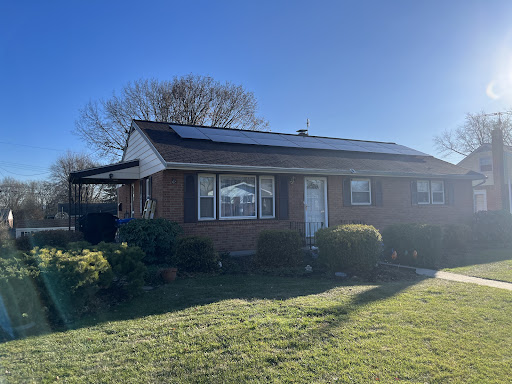
Roof readiness is the main technical determinant of your system's enduring performance, needing a professional assessment of structural integrity and environmental exposure before any equipment is mounted. When you are Finding a reliable Maryland solar panel installation company, prioritize those that execute a thorough physical site audit rather than relying solely on satellite imagery.
“The Solar PV arrays associated with these structures are limited to 150 feet by 150 feet (no greater than 150 feet along either axis).” — baltimorecountymd.gov
Your provider must assess your home against specific performance criteria to ensure the array produces the expected energy output. Examine the following factors that determine your roof’s eligibility:
- Remaining Lifespan: If your roof requires replacement within the next 5 to 10 years, complete that work before your PV installation to avoid the high cost of detaching and resetting the system.
- Orientation and Tilt: South-facing roofs typically optimize solar harvest in this region, though east or west configurations can remain viable depending on the specific tilt angle.
- Shading Obstructions: Nearby trees, chimney stacks, or adjacent structures produce shadows that significantly diminish production; your vendor should use precision tools to map these impacts throughout the year.
- Structural Integrity: The existing roof rafters must carry the static load of panels and racking equipment, particularly during heavy snow or strong-wind events.
Before signing a contract, request a detailed shading analysis report and a written confirmation from your contractor regarding the current state of your shingles or roof material.

Table of Contents
- – How You Should Evaluate Maryland Solar Panel In...
- – How Do Maryland Solar Panel Installation Compa...
- – Handling The Permit And HOA Approval Process F...
- – Improving Your Maryland Solar Panel Installati...
- – How Financing Affects Your Decision Of Marylan...
- – Guidance On Evaluating Your Roof For Solar Pan...
Latest Posts
Deciding Between Different Maryland Solar Panel Installation Companies
Obtaining Exact Quotes From Delaware Solar Panel Installation Companies
Navigating Offers From Maryland Solar Panel Installation Companies
More
Latest Posts
Deciding Between Different Maryland Solar Panel Installation Companies
Obtaining Exact Quotes From Delaware Solar Panel Installation Companies
Navigating Offers From Maryland Solar Panel Installation Companies